


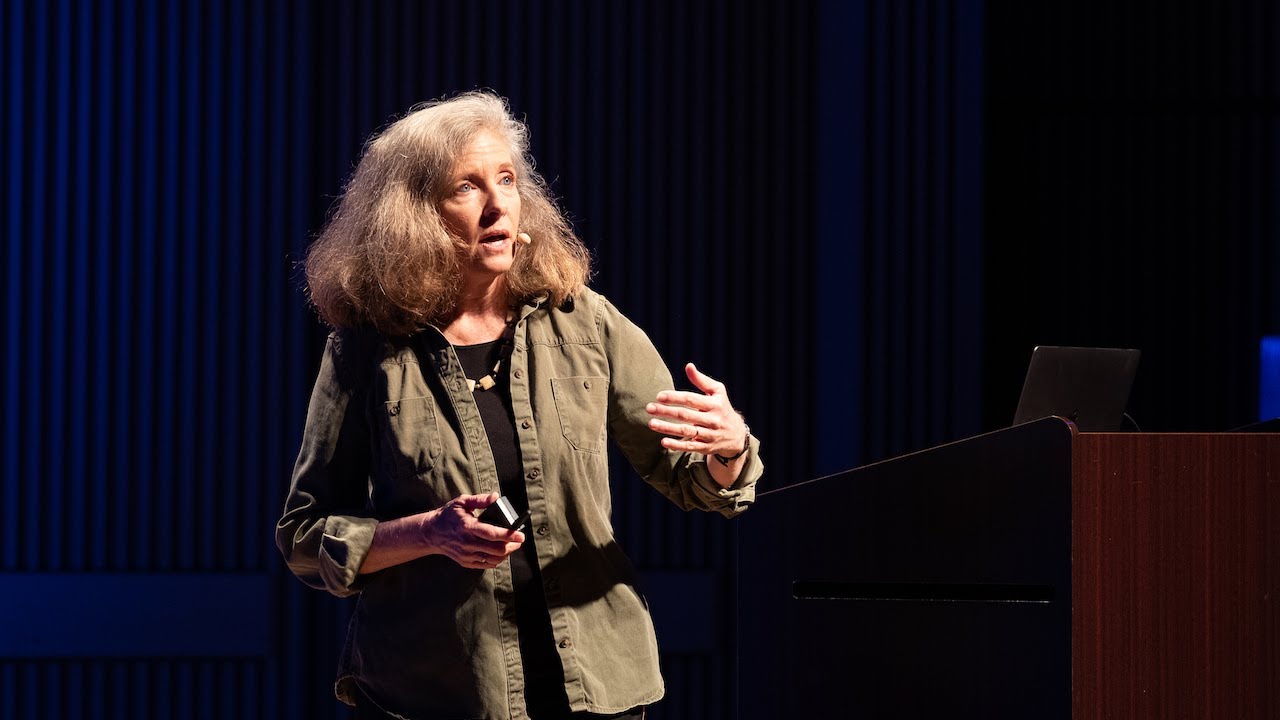
 Think cities from thousands of years ago are ancient history? Think again. Archaeologist Monica L. Smith shows how in a number of crucial respects, ancient and modern cities are exactly the same. These urban continuities, Smith argues, are going to be with us forever—or, at least, for the next 10,000 years.
Watch the full talk here:
http://longnow.org/seminars/02019/aug...
“Cities were the first Internet,” says archaeologist Monica Smith, because they were the first permanent places where strangers met in large numbers for entertainment, commerce, and romance. And the function and form of cities, she notes, have remained remarkably constant over their 6,000 years of history so far. Modern city dwellers would quickly find their way around any city in the past, given our shared architecture of broad avenues, monumental structures, and densely crowded residences.
What we learn from examining the long history of cities is what makes them so freeing and empowering for humans and humanity. Density has always been crucial. So has infrastructure, skill specialization, cultural diversity, intense trade with other cities, an economy of acquiring and discarding objects, the delights of fashion and art, religious focus and political focus, intellectual ferment, and technological innovation.
The digital internet has not replaced cities, nor is it likely that anything else will, Smith proposes, for the next 6,000 years.
Monica L. Smith is an anthropology professor and also a professor in the Institute of the Environment and Sustainability at UCLA. She has done archeological fieldwork in India, Bangladesh, Madagascar, Egypt, Tunisia, Turkey, Italy, and England. Her new book is Cities: The First 6,000 Years.
Subscribe to our podcasts: http://longnow.org/seminars/podcast/
Explore the full series: http://longnow.org/seminars
More ideas on long-term thinking: http://blog.longnow.org/
The Long Now Foundation is a non-profit dedicated to fostering long-term thinking and responsibility. Our projects include a 10,000 Year Clock, endangered language preservation, thousand year+ data storage, and Long Bets, an arena for accountable predictions.
Become a Long Now member to support this series, join our community, and connect with our ongoing work to explore and deepen long-term thinking: http://longnow.org/membership
Like us on Facebook: https://www.facebook.com/longnow
Follow us on Twitter: https://www.twitter.com/longnow
Subscribe to our channel: https://www.youtube.com/longnow
What Ancient and Modern Cities Have in Common — Monica L. Smith at Long Now architecture 101 izle | |
| 5 Likes | 5 Dislikes |
| 115 views views | 17K followers |
| Science & Technology | Upload TimePublished on 30 Sep 2019 |

Không có nhận xét nào:
Đăng nhận xét